

When the Generator Is the Grid: Fuel Systems for Continuous Running
How is a prime power fuel system different from a standby one?The tank turns over in weeks rather than years, so long-term oxidation stops being the leading risk. What replaces it is throughput: fuel quality at the point of delivery, water and particulate arriving with every load, filter elements consumed at a rate a standby design never anticipated, and a bulk store that is refilled often enough that the tank is never allowed to settle.
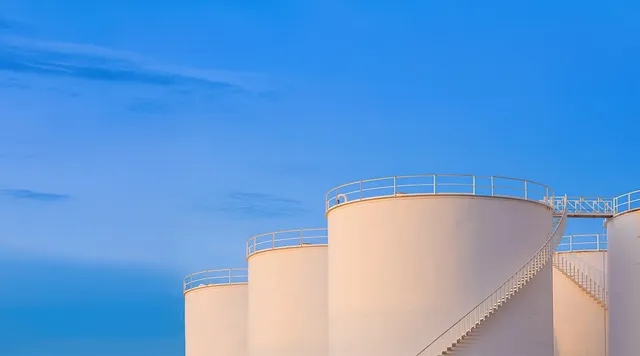
Two different jobs that use the same equipment
A standby generator sits idle, is tested monthly, and runs in anger a handful of times in its life. Its fuel sits with it, and the engineering problem is degradation over time.
A generator carrying load for eight, twelve or eighteen hours a day is doing a different job with the same hardware. It consumes fuel at a rate that empties and refills the tank continuously, so the fuel in it is rarely old. The engineering problem moves somewhere else entirely.
This distinction gets lost because the equipment catalogue is the same and the standards most often quoted, NFPA 110 among them, are written around emergency and standby duty. A facility in Lagos, Abuja or Port Harcourt running generators as its primary supply is operating a small power station, and the fuel system should be designed as one.
What changes when the tank turns over quickly
Four things, in order of how much trouble they cause.
Delivery quality becomes the dominant variable. In a standby installation, one tanker load might last three years, so one poor delivery is one problem. Where the tank refills every few weeks, every delivery is a fresh opportunity to introduce water, particulate or off-specification fuel, and the exposure is continuous. Whatever quality control exists at the point of delivery is doing far more work here than the same procedure would at a standby site.
The tank never settles. Water and sediment separate out of diesel by gravity, slowly. A tank that is topped up frequently, and stirred every time a tanker discharges into it, keeps that material in suspension rather than letting it settle where it can be drained. The classic advice to draw a bottom sample and drain the water assumes the water has had time to get to the bottom.
Filter duty goes up by an order of magnitude. Element life is a function of throughput, not of calendar time. A filtration arrangement sized for a standby generator’s annual test schedule will be consumed rapidly under continuous running, and the failure mode is a restriction that starves the engine rather than a filter that simply looks dirty.
Fuel handling becomes an operational routine. Deliveries, transfers, level management and reconciliation happen weekly rather than annually. That means procedure, records and a person responsible, which is a set of requirements the standby model never generates.
What stays the same, and gets forgotten
Two risks do not go away just because the fuel is fresh.
Water still enters, both from deliveries and from tank breathing, and in a humid coastal climate it enters quickly. Fresh fuel with water in it is still fuel with water in it.
Microbial growth still happens. It needs water and a fuel-water interface, and it establishes itself on tank walls and in low points rather than in the flowing fuel. High turnover does not flush a biofilm out; the colony lives on surfaces, not in the stream. ASTM D6469 remains the relevant guide.
There is a specific trap here. A site running generators continuously will often reason that its fuel cannot be old and therefore cannot be a problem, and will skip testing entirely. The tank then accumulates water and a microbial population over years while the fuel above it is always fresh. That holds until a filter blocks during peak load and nobody can explain why.
Bulk storage and the refill interval
Sites that depend on generator power usually hold a larger bulk store than a standby site of the same size, for an obvious reason: they are buying against supply interruption as well as against grid failure.
That combination of a large tank, high throughput and frequent deliveries sets up the situation described above particularly clearly. It is worth designing around directly.
- Separate the receiving function from the supply function. A tank that receives deliveries and feeds engines from the same volume never gets a quiet period. Where the site has room, a receiving tank that settles before its contents are transferred to the service tank gives water and sediment somewhere to drop out.
- Filter on transfer, not only on supply. The transfer between bulk and day tank is the natural place to condition the fuel, because everything the engine will burn passes through it.
- Design the drain point for frequent use. In a continuously running installation, water draining is a weekly task rather than an annual one, and it should be a two-minute job at an accessible valve rather than something that needs a shutdown.
- Size filtration for throughput. Take the actual fuel consumption per day, not the generator nameplate, and specify element capacity and change interval from it. Then stock the elements, because running out is what turns a maintenance item into an outage.
Where fuel polishing earns its place under high turnover
The instinctive objection to a fuel maintenance and polishing system at a high-throughput site is that the fuel is not sitting long enough to need one.
That misreads what the system is for. Under continuous running its value is not in preserving fuel over years. It is in three things:
- It conditions every load that arrives, which is the point of greatest exposure at this kind of site.
- It removes water and particulate continuously, rather than relying on a settling period the tank never gets.
- It protects the engine filtration, so that primary elements do the work and engine-mounted filters are not the last line of defence against a bad delivery.
The economics are different from a standby site and, in most cases, more favourable. At a standby site the return on fuel polishing is insurance against a rare event. At a prime power site it is a reduction in element consumption, in unplanned engine stops and in injector wear, on equipment that is running every day. That return is measurable in ordinary operating cost rather than in avoided disaster.
Monitoring matters more, not less
At a standby site, a fuel system that reports nothing is a risk. At a prime power site it is an operational blind spot in something that runs daily.
Connecting tank levels, transfer pump status, filter differential pressure and water detection to a BMS or SCADA platform answers questions that come up constantly at this kind of facility: how much fuel is on site, when the next delivery has to be ordered, whether the filters are approaching their change point, and whether the last delivery matched the quantity invoiced.
Differential pressure across the filters is the single most useful signal. It turns element replacement from a calendar guess into a measurement, which at high throughput is the difference between changing elements too often and finding out too late.
Engineering the whole chain rather than buying a generator
The pattern to avoid is the one where generator capacity is specified carefully and the fuel infrastructure behind it is assembled from whatever the contractor had available.
A generator running as prime power is only as available as the fuel path feeding it: bulk storage, transfer, polishing, day tank, and the controls that manage all of it. Sizing the engine correctly and then feeding it through an under-specified fuel system produces a plant whose availability is set by the weakest part, which will be the part nobody drew.
That is the case for treating this as fuel engineering rather than as an equipment purchase, with the tanks, transfer, polishing and automation designed together against the actual duty cycle, which for a prime power site is a very different duty cycle from the one the standard designs assume.
Where the generator is the primary supply, the fuel risk moves from age to throughput. Condition every delivery, give the fuel somewhere to settle, size filtration from actual daily consumption, and monitor differential pressure rather than guessing at element life.
Standards referenced: ASTM D975 and EN 590 for diesel requirements, ASTM D6469 for microbial contamination in fuels and fuel systems, and NFPA 110 for emergency and standby power systems. Read more on Diesel Fuel Maintenance Systems and Turnkey Fuel Engineering.